Week 1 Research (Part B) : Japanese Character Design
<Please read article Week 1 Research (Part A) : Japanese Character Design first>

It was fun to study different approaches used in Japanese anime and western animations.
8. 生田神社
Ikuta Shrine
We went to the Ikuta Shrine to watch fireflies under heavy rain.

We went to the Ikuta Shrine to watch fireflies under heavy rain.

Three animal mascots went out and held the opening ceremony. They greeted people with nice body language. I was shocked when they came out as the animal head and human body are not matched. It was quite weird but I still found it fun to add some mascots and characters into the holy opening ceremony.


Though there were too many people and heavy rain, we could still find some fireflies. They are beautiful. Nature is the best inspiration for designs.


9. 姬路城 Himeji Castle
We traveled to Himeji for an hour. Though it took lots of time, there was awesome scenery near the countryside.


Buildings of Himeji are the fusion of Japanese tradition and modern style.

It is fun to see a cosplayer singing in the street near the world heritage site.


The mascot of Himeji could be seen everywhere. The character is feminine with Sakura as the hair decoration. It is easy to recognize and nice for travelers.


Approaching to Himeji Castle, one of the world heritage site!


We need to take off the shoes before entering the castle. The department protects the heritage well by using a few artifact lights only. Most of the light source is the sun.


Awesome structure of the castle. It stands firm during an earthquake.

There was a hosing system in the past. People with high status lived near the castle.


Detail design.


Guardian saint status for different periods.


10. 四天王寺 Shitennō-ji
Like most of the temples, it uses red as the primary color.


Actually, the architectural design is quite similar to Chines temples. However, Japanese people added their tradition into the design, like the door curtain, flag, and patterns, which let people differentiate between these two cultures.
 |
| Shitennō-ji |
 | ||
| Mogao Caves in Dunhuang. Photo from the Internet. |
Fuujin and Raijin are two Japanese saints. It is often to see Japanese artists, like Koji Kinutani, take their religious to be their artwork's theme and reference. 

 |
| These two saints were taken for making Icoca card. Photo from the Internet. |
 |
| A picture in Saint Young Men from the Internet. |
For the animation, Saint Young Men is one of the examples, Hikaru Nakamura transformed Jesus and Gautama Buddha into a human image and live in an apartment in Tokyo. The religious image becomes friendly and interesting when they become an anime characters. The character establishment is successful and the anime makes a big echo.
11. 安居神社 Yasui Tenmangu
Temple for Sanada Yukimura. It triggered my curiosity on finding the history of this famous warrior. It was fun to find out Japanese likes to convert warriors into the manga/ game characters, like the one they did for Sanada Yukimura in Basara game.

 |
| Character Sanada Yukimura in Basara. Photo from the Internet. |
Though it is quite difficult to associate the temple with the character above, it increases my interest towards the warrior and imagination on the Japanese history.
12. 通天閣 Tsūtenkaku


A kind of art performance in the past. Make-up and presentation look like Takarazuka Revue.


There are many animal mascots and status in front of the stores, like the turtle and fugu, which are very attractive as a marketing strategy.
The most adorable chracter is Billiken. A fat boy with a big smile, large foot size and small eyes. As people said, he brings luck. Though this character comes from the USA, it became a famous sybol of Osaka and people even developed Billiken food as the gimmick.


After doing research on character design and comparing with western animation, I found out about the enchantment of Japanese anime.
Different from the western animation, like Disney animation feature film and Cartoon Network, character animation in Japanese anime does not have smooth movement as fewer frames are drawn.
Most of the anime's characters are very weak and useless at the beginning. They grow up and work with friends to become stronger. For examples, Nobita Nobi in Doraemon, Akihisa Yoshii in Baka and Test, Kumatetsu and Kyūta in The Boy and the Beast.
The audience will easily go into the story by finding the similar experience from the weak characters.
 |
| Nobita Nobi in Doraemon. Image from the Internet. |
 |
| Akko from Little Witch Academia. Image from the Internet. |
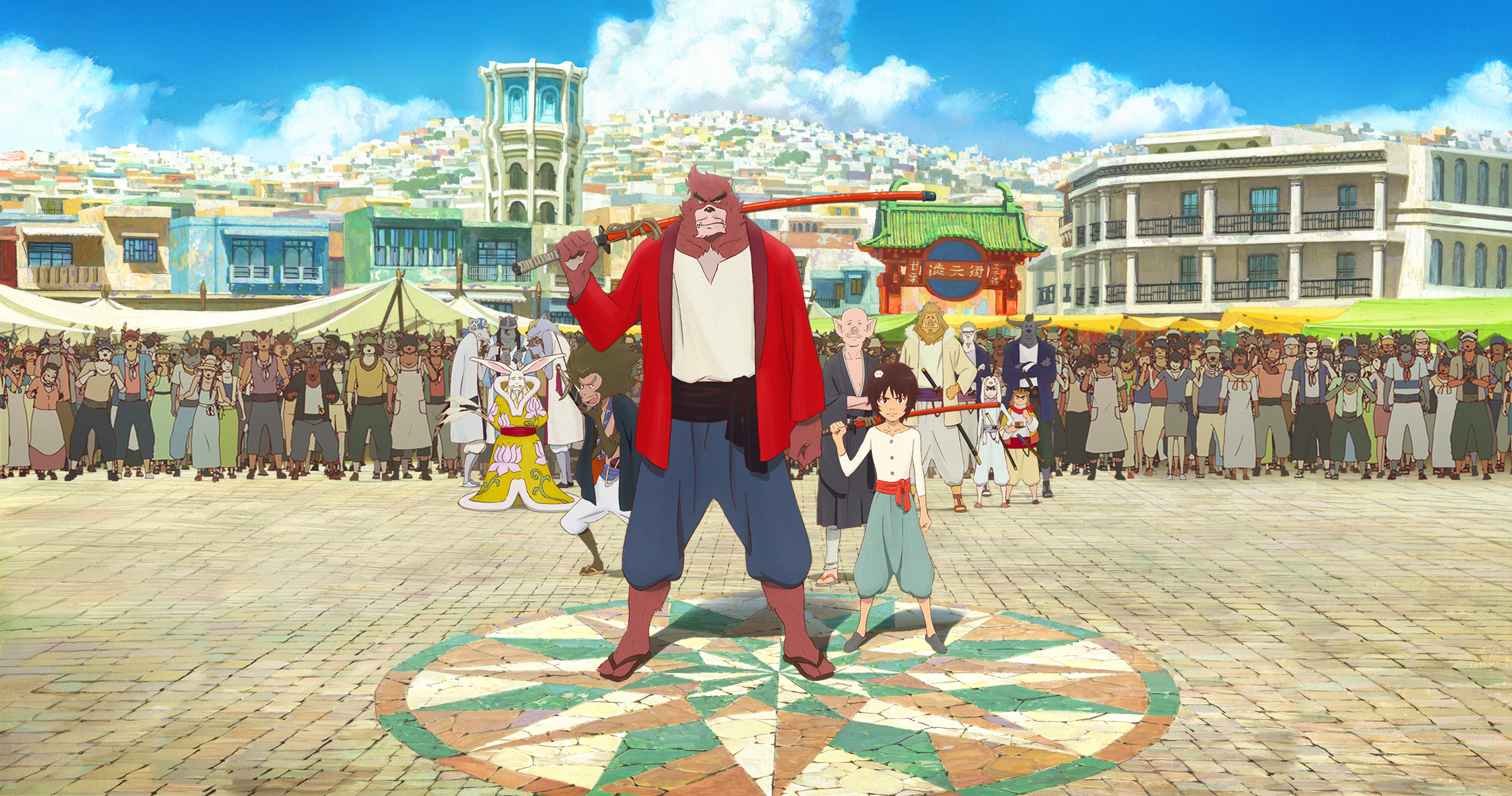 |
| Kumatetsu & Kyuta in The Boy and the Beast. Image from the Internet. |
Compared to the hero archetype in western animation, the characters are set very powerful and become better after fixing the bad guys or problems, like James P. "Sulley" Sullivan in Mosters, Inc., Mr. Incredible in The Incredibles and Count Dracula in Hotel Transylvania.
 |
| Sullivan in Monsters, Inc. Image from the Internet. |
 |
| Mr. Incredible in The Incredibles. Image from the Internet. |
 |
| Count Dracula in Hotel Transylvania. Image from the Internet. |
 |
| Deadpool in Deadpool. Image from the Internet. |
Comments
Post a Comment